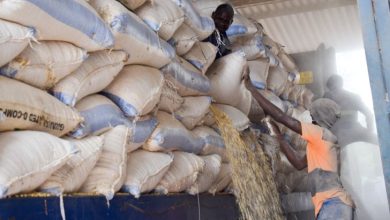
Ministry of Agriculture, Irrigation and Water Development has rolled out the 2026/27 Farm Inputs Subsidy Programme (Fisp) with an assurance that farmers will access inputs on time, but declined to disclose fertiliser suppliers.
During the launch in Ntchisi District yesterday, Minister of Agriculture, Irrigation and Water Development Roza Fatch Mbilizi said the programme has secured 70 000 metric tonnes (MT) of fertiliser and will benefit 1 221 862 resource-constrained smallholder maize farming households.
She also said government has already identified transporters to distribute the inputs and will expedite the process in districts that receive rains early.

“We recognise the challenges faced by farmers in hard-to-reach areas. Government is committed to ensuring that farmers do not lose valuable production time because of delays in accessing agricultural inputs,” said Mbilizi, adding that Ntchisi was chosen to host the launch because it is among areas that receive early rains.
She said timely access to inputs will be critical for farmers to make effective use of rainfall and achieve the production levels expected during the 2026/27 farming season which is forecast to have El Nino that will see some areas getting above normal rainfall and others, especially in the Southern Region, experiencing prolonged dry spells.
But Mbilizi, who insisted that the procurement followed proper procedures, could not disclose the fertiliser suppliers and the number of transporters contracted, only stating: “There are so many transporters involved. I cannot start to mention them one by one.”
Giving a breakdown of the package, she said each beneficiary will contribute K20 000 for a 50 kilogramme (kg) bag of fertiliser and K10 000 for a 5kg pack of maize seed.
Mbilizi further said the programme would also introduce a soil-health component under which two beneficiaries would work together to produce Mbeya fertiliser, a blend of organic and inorganic materials.
Under the revised Fisp as unveiled in July this year, 610 931 smallholder farmers are expected to directly receive subsidised inorganic fertiliser and certified seed while 1 221 862 are to be reached indirectly through integration of Mbeya organic fertiliser production.
Mbilizi said that under the arrangement, each pair will receive one bag of chemical basal fertiliser and one bag of chemical top-dressing fertiliser for use as ingredients to produce five bags each of Mbeya basal and top- dressing fertiliser, with technical support from extension workers.
The programme will also promote one seed per planting station, commonly known as Sasakawa, and other practices aimed at improving plant population, productivity and efficient use of inputs, according to the minister.
In a bid to address rising seed prices, she said the ministry has produced seed after private companies were selling a 5kg pack at K80 000 last growing season. She said the government-produced seed will fetch K10 000 per 5kg pack for Fisp beneficiaries.
Mbilizi also said the emphasis on soil health was a major shift from previous approaches to Fisp, arguing that increased use of inorganic
fertiliser had not translated to higher maize production because of declining soil health.
In an interview yesterday, Mwapata Institute executive director William Chadza described the integration of organic and inorganic fertiliser as a progressive step that could improve soil health and maize yields.
He said prolonged use of inorganic fertiliser had contributed to declining soil health, which affected the response of maize to fertiliser.
“In the medium term it should improve the maize yield response to organic fertiliser, when you integrate the organic and inorganic fertilisers, because currently the response of our maize yield to inorganic fertiliser has significantly gone down due to poor soil health,” said Chadza.
One of the beneficiaries, Gift Chiundila, a member of Chilinthaka Farmers Organisation in Traditional Authority (T/A) Vuso Jere in Ntchisi, said farmers were already trained in making and applying Mbeya fertiliser and other good farming practices.
Ntchisi East legislator Febbie Chikaonda commended government for continuing with the subsidy programme, saying it was important for food security.
The 2026/27 Fisp was allocated K111 billion in the K10.9 trillion national budget. Last year’s programme cost K241 billion and targeted 1.1 million beneficiaries, with each farmer receiving two bags of fertiliser.
In the past six years, government has cumulatively spent K913 bi l lion on agricultural subsidies while spending K873 billion on emergency food assistance as millions continued to face food insecurity.
Malawi recorded a maize deficit of about 600 000MT in 2025 after producing 2.9 million MT against a national requirement of 3.6 million MT.
Introduced in the 2005/06 season, Fisp was once credited with boosting maize production and food security. However, repeated concerns over leakages, inefficiencies and persistent food shortages have intensified calls for far-reaching reforms